


Here’s a description of Lost in Reefs Match 3 — what it is, how it plays, and what makes it (or doesn’t) stand out.
🎯 What is Lost in Reefs Match 3
- Lost in Reefs Match 3 is a match‑3 / puzzle‑casual game set in an underwater / sunken‑city theme. (GameTop.com)
- As you solve puzzles, you gradually reconstruct a forgotten underwater city / civilization that sank into the depths long ago. Your progress across levels helps “raise” districts and reveal more of the city’s ruins and secrets. (GameTop.com)
🧩 Gameplay Mechanics & Features
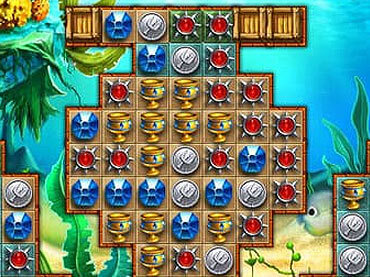
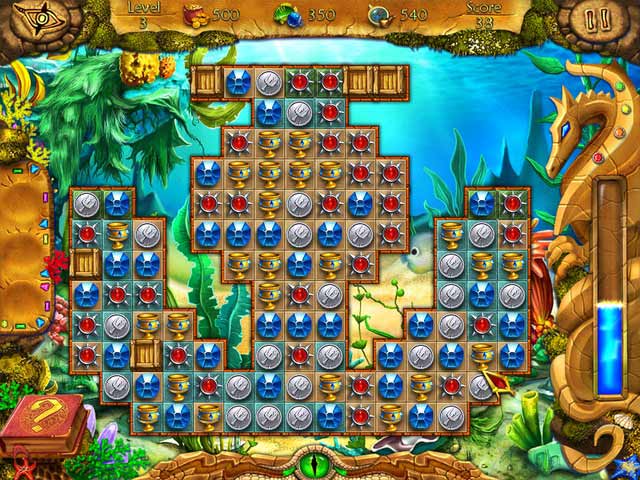
- The core gameplay is match‑3: you match tiles to break “marble plaques” / stone tiles covering the board. By matching over them you clear them and free up space. (GameHouse.com)
- There are multiple gameplay modes — depending on the level, you may use different board layouts. The game offers variety beyond a plain “match‑3 every time.” (GameHouse.com)
- As you clear boards, you collect resources. These resources are then used to build/restore parts of the underwater city — so there’s a city‑building / progression element on top of puzzles. (MacGameStore)
- The game is relatively lightweight and modest in size (small download size), which makes it accessible for modest PCs. (GameTop.com)
- It features a relaxing atmosphere: underwater visuals, calm (or ambient) soundtrack, and a casual pace — more “explore & restore” than “race against time.” (GameHouse.com)
🌊 Theme, Atmosphere & “What It Feels Like”
- The setting is a sunken civilization beneath the sea — giving the game a sense of mystery: ruins, hidden city, underwater exploration feel. (WildTangent)
- Because of the “restore city + puzzles” loop, playing Lost in Reefs feels like a cautious underwater expedition: you solve one puzzle, uncover a bit of history, rebuild part of the city, then dive deeper. Over time, you gradually see visible progress (new districts, city structures), rather than just clearing arbitrary levels.
- The combination of puzzles + gradual rebuilding + calm atmosphere makes it suitable for casual, relaxed sessions, where you want low pressure and a nice sense of progression — more “discovery & light challenge” than “intense or competitive.”
✅ What It Does Well — Strengths
- Blend of puzzle + light city‑building: The mix of match‑3 mechanics with resource collection and city restoration gives more purpose to puzzles compared with games that just “match for points.”
- Accessible & relaxed: Simple match‑3 rules, combined with a casual pace and modest system requirements, makes it easy to pick up and play — good for casual gamers or quick sessions.
- Atmosphere & presentation: The underwater + sunken‑city theme adds flavor and ambience, which helps make the game feel more than just another gem‑matcher.
- Variety in levels / modes: Because of different modes or board layouts, it avoids feeling too repetitive immediately — there’s some variety.
⚠️ What to Know / Possible Limitations
- The “city‑building” aspect is mostly cosmetic/progression‑based: it doesn’t turn the game into a deep simulation or elaborate strategy game. It remains fundamentally a match‑3 puzzle.
- Over time (especially after many levels), the core match‑3 mechanic may feel repetitive — as with many puzzle‑casual games. The novelty of “uncovering city” may wear off after a while, if you don’t enjoy the “match + rebuild + repeat” loop.
- The game is older / simpler: visuals, effects, and mechanics are not “modern AAA” — but that’s part of its charm if you appreciate simpler, lightweight casual games.
🧑💻 What Playing It Feels Like
Playing Lost in Reefs Match 3 feels like exploring a forgotten underwater kingdom — each match removes layers of stone, each cleared tile reveals treasures or resources, and with each level the ruined city slowly comes back to life. It’s soothing, somewhat meditative, and gives a subtle “progress + reward” feeling rather than forcing you into high-stress, fast‑paced gameplay. Good for when you want to unwind, puzzle casually, and feel a bit of satisfaction with building/restoration.