

Here’s a description of The Lost Inca Prophecy — what it is, how it plays, and what makes it distinctive.
🎯 Overview
- The Lost Inca Prophecy is a casual puzzle-adventure game for PC (Windows). (GameTop.com)
- The game was developed by Seppia Interactive. (Metacritic)
- It blends match-3 puzzle mechanics with hidden-object / bonus puzzle / adventure-style segments — giving it a hybrid feel of puzzle + light adventure. (Gamezebo)
📖 Story & Setting
- You play as a character named Acua, who begins having vivid dreams about a “New World.” She wakes up to find she has drawn a mysterious map — a place she’s never visited before. (GameTop.com)
- Motivated by those dreams, Acua travels to the New World alongside a companion named Juan de Salcedo (in some versions) to find and restore ancient Inca temples, and to prevent a terrible prophecy from dooming the Incan civilization. (Jay is Games)
- Along the way, you’ll uncover relics, decode an “Inca prophecy,” and rebuild sacred temples — all wrapped in a mysterious, somewhat mythic atmosphere. (GameTop.com)
🧩 Gameplay Mechanics
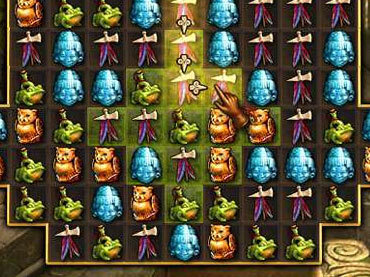
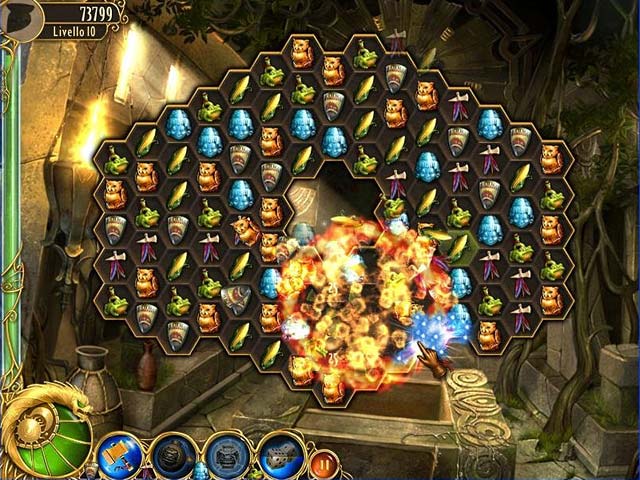
- Match-3 puzzles are the core gameplay: you match tiles (swap, group, or chain) to clear the board, break tiles, and reveal hidden pieces. (The Gamesmen)
- You have multiple play styles / modes — you can choose how to match: Swap, Group, or Chain. (GameHouse.com)
- The board shape can vary (square, hexagon, or mixed boards) depending on your preference — giving some flexibility and replay value. (The Gamesmen)
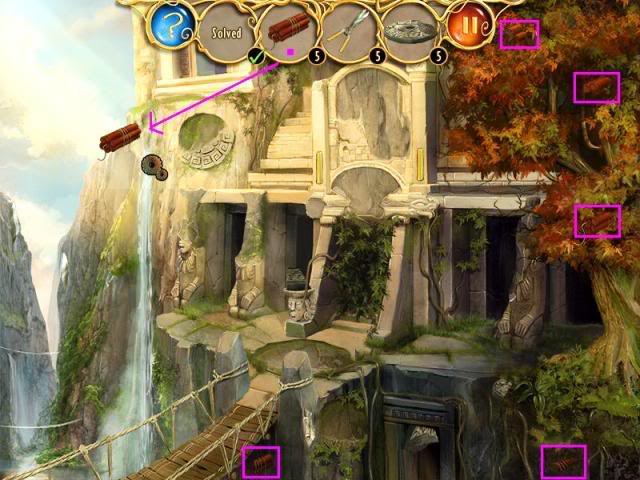
- As you succeed in match-3 puzzles, you collect pieces of “objects” — when you gather enough, you trigger hidden-object / bonus puzzle scenes (so it’s not just pure matching all the way). (Jay is Games)
- The full game includes a substantial amount of content: roughly ~200 levels (or close, depending on the distribution between match-3 boards and hidden-object scenes) across multiple chapters. (The Gamesmen)
✅ What Makes It Appealing
- The mix of gameplay types — match-3 + hidden-object + light adventure — makes it more varied than a standard “just match gems” game.
- Giving a player choice in how to play (swap / group / chain; square / hex / mixed boards) — good for casual players or those wanting different challenge styles.
- The narrative framing (dreams, prophecy, saving the Inca, restoring temples) gives more meaning to the puzzles — it adds a sense of journey, exploration, and purpose beyond just clearing boards.
- Because it’s a casual-style game with modest system needs, it’s suitable for many PCs (even older ones) and for players who want a relaxed, low-pressure gaming session.
⚠️ What to Know / When It Might Not Click
- Despite the “adventure / prophecy / Inca lore” framing — the narrative is relatively light. Some critics felt the story was forgettable, and the writing had flaws (some inaccuracies, spelling/grammar issues). (Gamezebo)
- The challenge curve is mild: once basic mechanics are learned, later puzzles don’t ramp up dramatically — and because there’s no timer or possibility of “failing,” the game can feel more like a relaxed, leisurely experience rather than a strategic or high-stakes challenge. (Gamezebo)
- If you’re looking for deep adventure, heavy story, RPG mechanics or deep strategy — this game may feel simplistic. It remains fundamentally a “casual puzzle + light adventure” game.
🎮 Experience: What It Feels Like
Playing The Lost Inca Prophecy tends to feel like a gentle, atmospheric treasure hunt — you hop from one puzzle board to another, uncovering fragments of ancient Inca culture, rebuilding temples, and slowly unraveling a prophecy. The mix of matching and hidden-object puzzles breaks monotony and keeps the flow varied. The visuals and ambient storytelling give a sense of mystery and exploration, but without heavy pressure or complex demands.
If you enjoy casual puzzle games that combine a light narrative with flexible gameplay — this title fits nicely. If you expect deep adventure or challenge, you may find it somewhat shallow.